


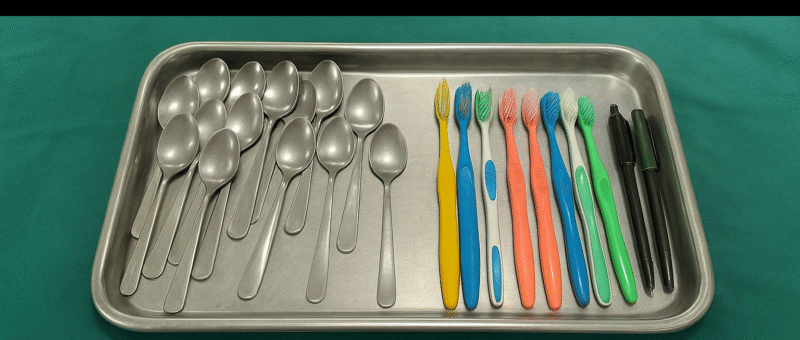

Meerut / Hapur, September 26: In a startling medical intervention, surgeons in Hapur, Uttar Pradesh, removed 29 steel spoons, 19 toothbrushes and two pens from the stomach of a 40-year-old man during emergency surgery, hospital officials said.
The patient, a resident of Bulandshahr, had been admitted a month earlier to a de-addiction centre in Ghaziabad. According to the hospital’s medical team, he began complaining of severe abdominal pain, prompting diagnostic imaging that revealed multiple metallic objects lodged throughout his stomach.
Dr. Shyam Kumar, who led the surgical team on September 17, told the press that during the operation, they were “astonished by the number of items” they retrieved. The patient was discharged later after his condition stabilized.
Psychological Distress Cited as Motivator
Medical authorities noted that the behavior likely stemmed from an underlying psychological disorder in which individuals ingest foreign objects—sometimes referred to as pica or related impulse control disorders. In his post-operation account, the patient claimed that he had swallowed objects in a state of agitation and despair. “My family placed me in that rehab facility but often mistreated me; they didn’t provide food. I felt helpless and hurt, so I began swallowing things to hurt myself,” he reportedly said.
The hospital emphasized that such extreme self-harm behaviour generally signals severe emotional distress, and that psychiatric counselling and follow-up would be essential to his recovery.
Context & Reactions
The case has drawn attention to mental health care, rehabilitation protocols, and oversight in de-addiction and wellness centres in the region. Observers say it underscores the invisible burden on patients who are placed in institutions but may face neglect, abuse, or psychological crises.
In response to media queries, the de-addiction centre did not provide an immediate comment, but health officials in the district said they would look into the protocols of the facility to ensure patient welfare and regular auditing.