
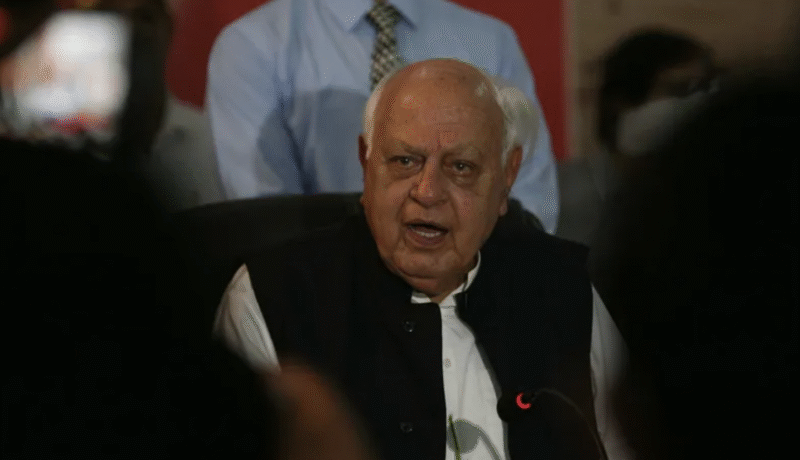

Dr. Farooq Abdullah, born on October 21, 1937, in Srinagar, is one of the most influential and enduring figures in Jammu and Kashmir’s political history. The National Conference (NC) president and former Chief Minister of J&K, he remains a key voice on issues of autonomy, democracy, and identity in the region.
Early Life and Education
Farooq Abdullah was born into one of Kashmir’s most prominent political families. His father, Sheikh Mohammad Abdullah, popularly known as the “Sher-e-Kashmir” (Lion of Kashmir), was the founder of the National Conference and a pivotal figure in J&K’s accession to India.
Farooq completed his early education in Srinagar before pursuing an MBBS degree from SMS Medical College, Jaipur. Later, he moved to the United Kingdom, where he briefly practiced medicine and met Molly Abdullah, whom he later married. The couple has four children, including Omar Abdullah, who went on to become Chief Minister of J&K from 2009 to 2015.
Rise to Power After Sheikh Abdullah’s Death
Farooq Abdullah entered active politics following the death of his father in 1982. Inheriting his father’s political legacy, he was elected president of the National Conference and soon sworn in as Chief Minister of Jammu and Kashmir.
His first tenure was marked by attempts to modernize governance and strengthen state institutions, but his government was short-lived. In 1984, he was dismissed from office after a split in his party — an episode widely viewed as politically engineered by the central government.
Political Comebacks and Challenges
Farooq Abdullah made a political comeback in 1986 through an alliance with the Congress, returning as Chief Minister after the 1987 Assembly elections. However, those elections were marred by allegations of rigging — a development many analysts believe fueled the rise of militancy in Kashmir.
As militancy spread in the early 1990s, Farooq resigned, and Governor’s Rule was imposed. The following years were among the most turbulent in Kashmir’s history.
When elections were held again in 1996, Farooq led the National Conference back to power, serving as Chief Minister until 2002. During this period, he focused on reviving democratic institutions and promoting development despite the continuing insurgency.
National Role and Parliamentary Career
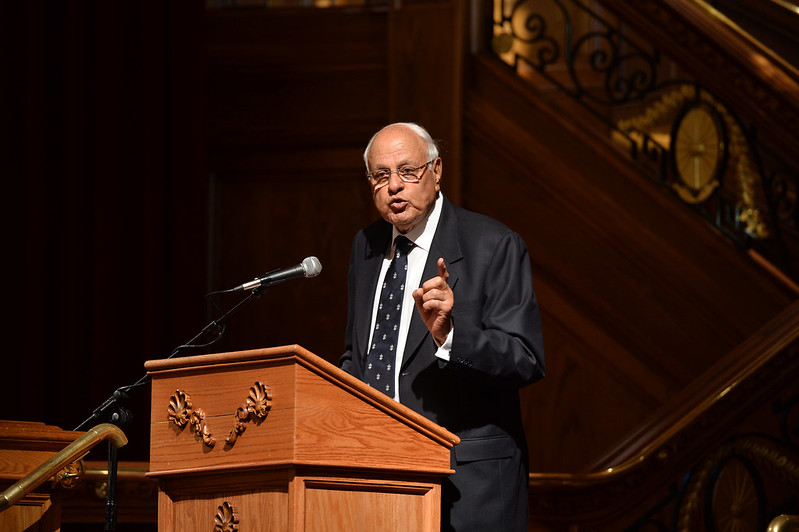
Beyond state politics, Farooq Abdullah has played a significant role at the national level. He has served multiple terms as a Member of Parliament, representing Srinagar and later Baramulla.
In 1999, he joined the Atal Bihari Vajpayee-led NDA government as Union Minister for New and Renewable Energy, underscoring his pragmatic approach to alliances and governance. Known for his spirited speeches, humour, and straightforwardness, Farooq remains one of the few leaders who can speak candidly about Kashmir on the national stage.
Position After Article 370 Revocation
Following the revocation of Jammu and Kashmir’s special status in August 2019, Farooq Abdullah was among several senior leaders detained under the Public Safety Act (PSA). Since his release in 2020, he has consistently called for the restoration of statehood and reinstatement of democratic rights in the Union Territory.
Legacy and Personality
Farooq Abdullah’s political career mirrors the complex trajectory of Kashmir itself — from hopes of autonomy and democracy to decades of turmoil and political uncertainty. Despite controversies, he remains a symbol of continuity and resilience in Kashmir’s politics.
Known for his charismatic personality, love for golf and poetry, and ability to connect with people across divides, Farooq Abdullah continues to be one of the most recognizable and outspoken leaders in Jammu and Kashmir.