



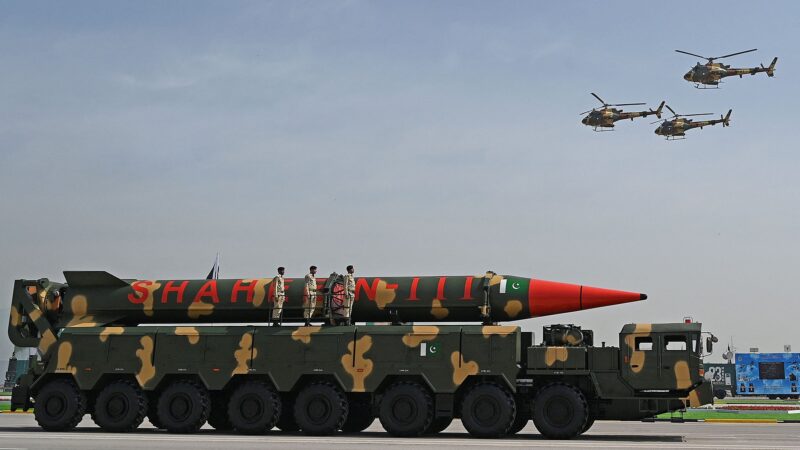

Islamabad, Mar 19: The United States has flagged Pakistan’s evolving missile programme as a potential future threat, but several analysts have rejected the assessment, arguing that Islamabad’s capabilities remain focused on regional deterrence, particularly against India.
Speaking before the Senate Intelligence Committee, US Director of National Intelligence Tulsi Gabbard said Pakistan, along with countries such as China, Russia, North Korea and Iran, is developing advanced missile systems that could eventually extend their reach. She noted that Pakistan’s long-range ballistic missile development could, in the future, include intercontinental capabilities.
However, experts have questioned the claim, pointing out that Pakistan currently does not possess intercontinental ballistic missiles (ICBMs). Its longest-range operational system, the Shaheen-III, has a range of about 2,750 km—sufficient to cover targets within India but far short of the distance required to reach the United States.
Analysts also emphasised that Pakistan’s nuclear and missile doctrine has historically been India-centric, aimed at maintaining strategic deterrence in South Asia rather than projecting power globally. They argue that framing Pakistan as a direct future threat to the US homeland relies more on speculative scenarios than current capabilities.
The debate comes amid continued scrutiny by Washington over Islamabad’s missile programme, including past sanctions targeting entities linked to its development. Despite this, Pakistani officials and experts maintain that the country’s strategic posture remains focused on regional security dynamics.