



Three Indian Army officers had a narrow escape after a Cheetah helicopter crashed in the high-altitude Tangste region near Leh in Ladakh, officials confirmed on Friday.
The helicopter, part of the Army’s ageing Cheetah fleet, crashed on May 20 during an operational sortie in the mountainous region. All three officers on board sustained minor injuries and are reported to be safe.
According to officials, the helicopter was being piloted by a Lieutenant Colonel and a Major, while Major General Sachin Mehta was travelling as a passenger.
The challenging terrain and harsh weather conditions of Ladakh have once again highlighted the operational risks faced by military aviators deployed in high-altitude regions.
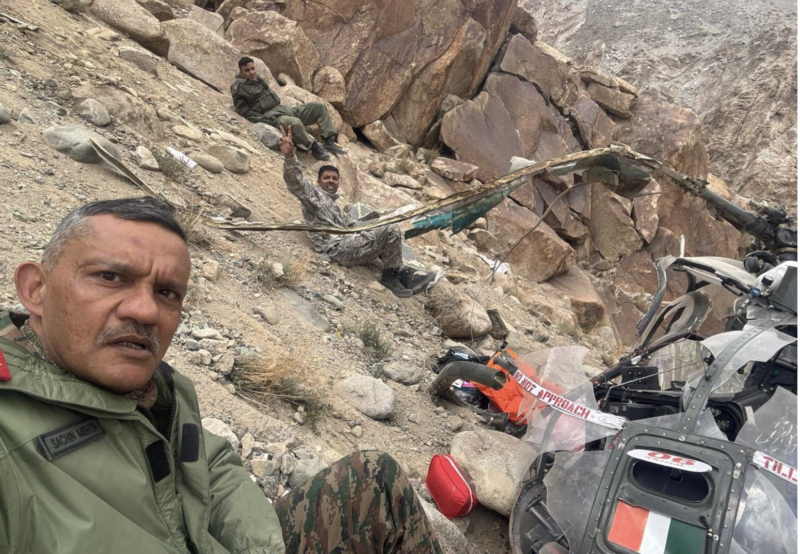
A selfie reportedly taken by Major General Mehta after the crash has gone viral on social media, with many users describing the officers’ survival as miraculous given the difficult terrain and the limitations of the ageing helicopter fleet.
An official inquiry has been ordered to determine the cause of the crash.
The incident has also reignited concerns over the safety and reliability of the Cheetah helicopters, which have been in service since the 1970s and are extensively used by the Indian Armed Forces for operations in remote mountainous areas, including Siachen and Ladakh.
The Cheetah helicopters have played a significant role in several military operations over the decades, including Operation Meghdoot launched in 1984 to secure strategic positions in the Siachen Glacier.
However, the fleet has also been involved in multiple accidents in recent years, prompting repeated discussions over the urgent need for modern replacement helicopters capable of operating safely in extreme high-altitude conditions.
Military experts say the helicopters continue to remain critical for transporting personnel, supplies and conducting surveillance missions in some of the world’s toughest terrains despite growing concerns over ageing infrastructure and operational safety.