



The Darbar Move is a bi-annual administrative ritual in the Union Territory of Jammu and Kashmir (J&K) under which the seat of government – including the Civil Secretariat, government offices and agencies – shifts between the two capital cities: the summer capital of Srinagar and the winter capital of Jammu. During the warmer months (roughly April/May to October) the offices function from Srinagar; during the colder months the government shifts its base to Jammu.
Historical origin
- The practice traces back to the Dogra era: it was initiated around 1872 by Maharaja Ranbir Singh (or variants attribute it to Maharaja Gulab Singh) of the then-state of Jammu & Kashmir, to enable the royal administration to function in Jammu during hard winters in the valley and in Srinagar during summer.
- Over the decades through the princely state period, and after India’s independence, the practice continued as a symbolic and functional arrangement: it was viewed as giving both regions of the state access to the seat of power, and reinforcing administrative presence across geographically and climatically distinct areas.
- The shift involves large logistics: thousands of employees travel, files and equipment are packed in trucks, and offices shut in one capital and reopen in the other. For many decades this was the practice under the state regime.
Why it was instituted: rationale
- Climatic/Geographic: Jammu and Kashmir cover terrain with harsh winters and distinct seasonal weather; the move allowed the administrative machinery to function in more favourable conditions.
- Administrative accessibility: By alternating capitals, the government presence would be visible and accessible to both major regions (Jammu region and Kashmir valley), which helps in governance equity; many observers call it a symbol of regional balance.
- Symbolic unity: Many local political leaders have said the Darbar Move served as a “bridge” between Jammu and Kashmir — culturally, administratively and economically.
Controversies & suspension
- High cost and logistical burden: One of the major criticisms was the expense: shifting thousands of employees, moving files, security, accommodation, transport — estimates ranged in the hundreds of crores of rupees annually (₹100–₹200 crore) for J&K.
- Question of relevance in digital era: With digitalisation of records and e-office frameworks, critics argued the physical move was outdated and inefficient. The J&K High Court observes the practice lacked a constitutional requirement and questioned its financial viability.
- Regional grievances: When the practice was suspended, especially in 2021, business and civil society groups in Jammu region said the halt impacted livelihoods (hotels, transport, markets) and undermined the symbolic inclusivity of the arrangement.
- Termination in 2021: In June 2021, under the administration of Manoj Sinha (then Lieutenant Governor) J&K ended the long-standing Darbar Move, citing cost savings and e-office transition. The government asked officials to vacate residence quarters in both capitals.
Resumption / Revival
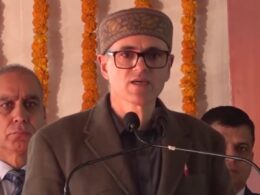
- After more than four years of suspension, the J&K government under Chief Minister Omar Abdullah announced in mid-October 2025 that the Darbar Move will be restored for the winter session 2025-26.
- On 16 October 2025 a formal order by the General Administration Department stated that offices observing five-day weeks would close at Srinagar on 31 October and reopen at Jammu on 3 November; offices on six-day weeks would close on 1 November. Some departments will move “in full”, others “in camp” (partial staff).
- The revival was framed as fulfilment of an election promise by the National Conference (NC) and as a measure to restore regional balance and create economic activity in Jammu region.
- Prime stated reasons for resumption: reaffirming inclusivity (“symbolises our unity”), regional economic benefit (especially for Jammu city markets), and administrative access.
Implications & Significance
- Governance: The revival implies the J&K administration is recommitting to the dual-capital structure, which may influence administrative planning, departmental logistics, employee postings, infrastructure maintenance in both capitals.
- Economic: Especially Jammu region stakeholders view this as a boon — shifting offices means influx of government employees, related commerce (lodging, transport, services) and seasonally dynamic economic activity.
- Political/Symbolic: The Darbar Move functions as a visible sign of regional parity (Jammu vs Kashmir); restoring it may help reduce feelings of alienation in Jammu region and strengthen the perception of inclusive governance.
- Cost vs Benefit Debate: While the tradition has symbolic value, critics still point to heavy cost and disruption twice a year. The revival may reignite debate on whether modernization (digital governance, single capital) is more efficient than historic practices.
- Operational logistics: The process involves massive coordination: transport of files, employee relocation, departmental functioning during transition, security arrangements on Jammu-Srinagar highway, etc. The partial “in camp” shift model suggests a modified version due to practicality.
What to watch going forward
- How smoothly the first winter 2025-26 shift is implemented: departments moving “in full” vs “in camp”, impact on staff, continuity of services, any teething issues.
- Financial disclosures: will the government publish cost estimates of the move and compare benefit vs expense?
- Reactions from Jammu business and civil society: early metrics on economic boost, market activity, hotel/leisure trade.
- Reactions from Kashmir Valley stakeholders: whether they feel the shift enhances or complicates access to government, whether summer 2026 move is also committed.
- Any structural modifications: e.g., if a hybrid model is adopted (some permanent offices in each capital, some rotating), or whether digital infrastructure lessens physical movement in future.
- Political developments: whether opposition voices raise concerns about cost, regional fairness, or whether the dual-capital model becomes a campaign point ahead of future elections.
Summary
The Darbar Move is a 150-year-old tradition in Jammu & Kashmir of shifting the seat of government bi-annually between Srinagar and Jammu. Instituted for climatic and governance reasons, it evolved as a symbolic bridge between the two major regions. Suspended in 2021 because of cost and digital governance arguments, it was revived in 2025 by the local government citing inclusivity and regional economic benefits. The revival reignites longstanding debates over tradition vs modernisation, cost vs symbolism, and regional balance in J&K governance.